Category: News
Field Trips Return to the Moakley Courthouse!
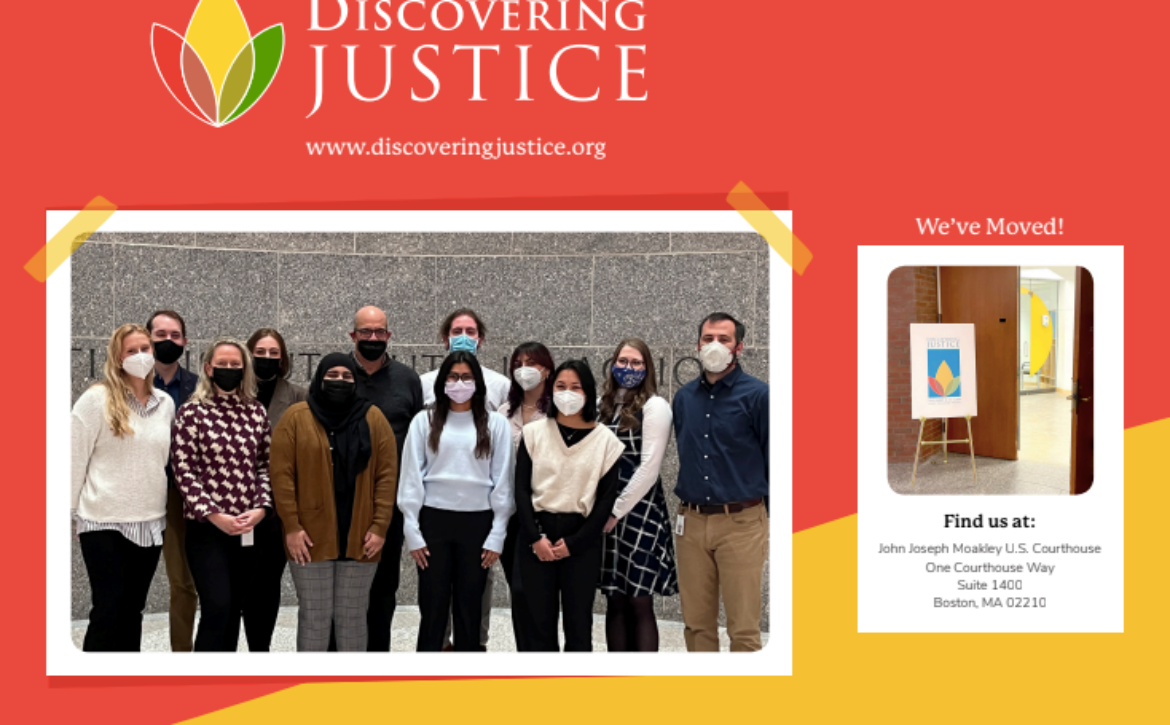
After a hiatus due to COVID-19, Discovering Justice is reopening its Field Trips to high school teachers and students this spring.
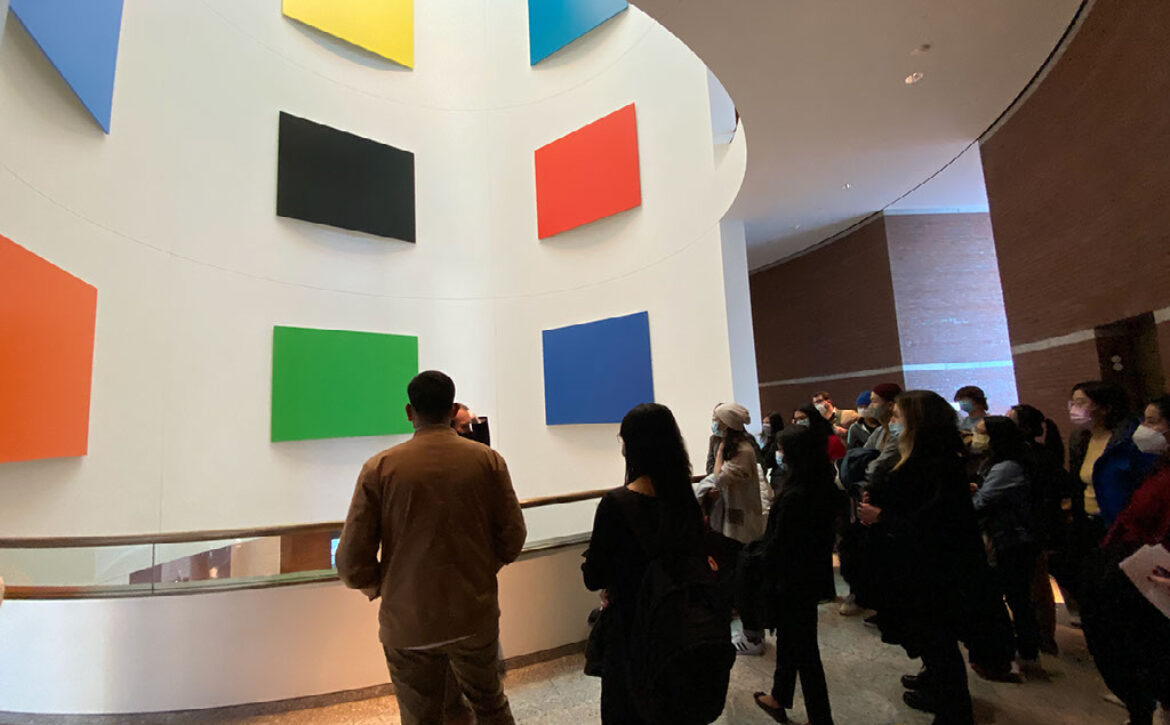
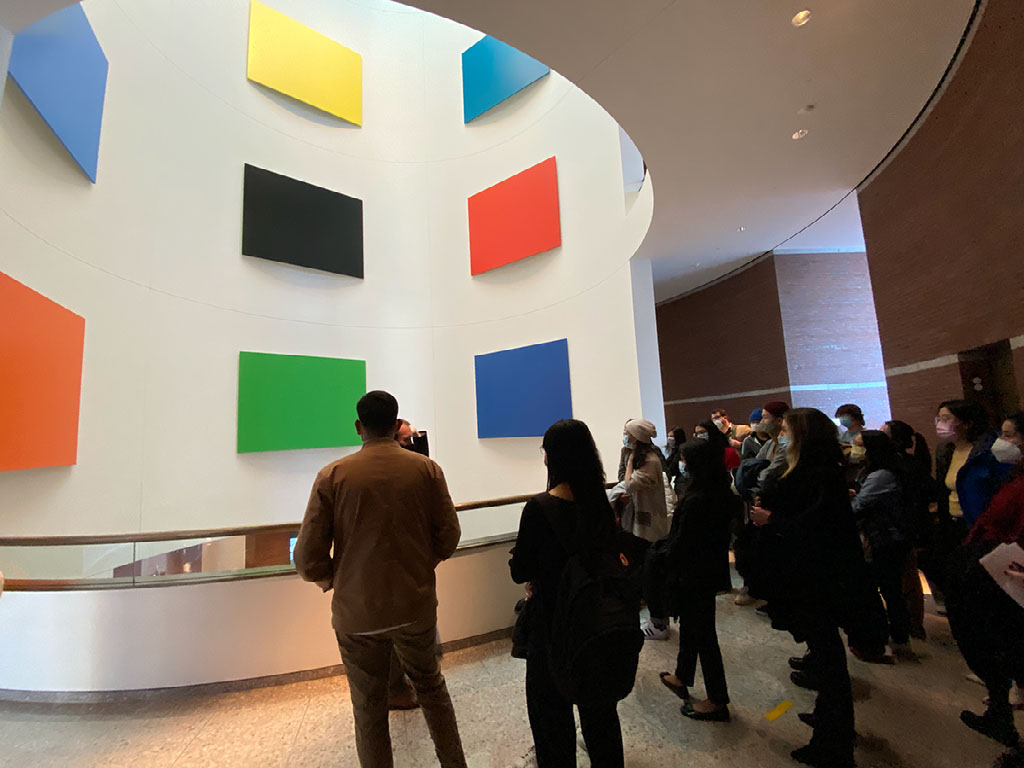
Field trips with Discovering Justice invite students to explore the workings of the courthouse as well as the themes and ideals of justice and democracy. While on a guided tour featuring interactive courtroom activities, students are encouraged to view, analyze, and discuss key features of the courthouse and the operations of the justice system.
High School Field Trips can include a tour of the Moakley Federal Courthouse, a Q&A session with a Federal Judge, and/or an opportunity to observe a live trial and judicial proceedings.
Through the program, students increase their understanding of the functions, roles, and structures in the American justice system, expanding their justice-related vocabulary and participating in activities both in the courtroom and the classroom. Field trips help students to cultivate their identities as active members of our democracy and to see the justice system not as a stagnant institution, but something they can utilize and engage with through civic action.
If you are a High School teacher who is interested in bringing your class for a Field Trip at the Moakley, contact Program Manager Henry Schunk at hschunk@discoveringjustice.org
Middle & Elementary School Field Trips will be available later this spring. If you are interested in Middle & Elementary School Field Trips to the Moakley Courthouse, contact Henry Schunk at hschunk@discoveringjustice.org
The 2021 Discovering Justice Annual Report
For more than two decades, Discovering Justice has helped students make sense of the nation’s justice system and explore the question: “What is justice, and how do I use my voice to advocate for it?” You will see in Discovering Justice’s 2021 Annual Report, that with the support of hundreds of legal mentors and dedicated educators, our students continue to grapple with this simple, yet complex, question.
Starting as early as Kindergarten, our programs help students examine “Little J” justice issues: how to look at micro-level fairness, and how to practice justice with friends and family at school, at home, and on the playground. The programs then pivot to help students explore the “Big J” justice issues embedded in the framework of our nation’s justice system and how these institutions impact our communities.
Take a look at the Annual Report to see how our programs help students identify injustice and inequalities in their daily lives and connect them to macro-level democratic systems. This approach encourages students to embrace their roles and responsibilities, bring justice and fairness to their communities, and engage in civic activity and potential careers.
Teaching Civics in Elementary Schools
How can we cultivate our young students’ civic identity, knowledge, skills, and dispositions so they are prepared to be active and thoughtful members of our democracy?
On April 6, as part of the Massachusetts Civic Learning Coalition webinar series, Discovering Justice Education Program Director Laura Brenner will lead the interactive workshop, Civic Knowledge, Skills, and Dispositions in the Elementary Classroom. Participants will engage with the history and social science practice standards and Discovering Justice’s new Children Discovering Justice Curriculum. The webinar, geared to teachers and administrators, aims to deepen understanding of, and practice with, integrating civic knowledge, skills, and dispositions into social studies and across the school day. The webinar will also highlight concepts such as perspective taking and issues of equity and justice.
You can register here.
“Unpopular Speech in Schools” Panel Highlight Tension on Campuses Over Free Speech
On November 23rd, students across Massachusetts heard first hand accounts of battles over free speech on school campuses at Discovering Justice’s Fall Student Panel, Unpopular Speech in Schools.
Joining the virtual conversation was Mary Beth Tinker, the plaintiff in Tinker v. Des Moines, a landmark Supreme Court case that helped define student rights in schools, Kevin Dua, a teacher from Massachusetts who encourages student activism, and Mike Hiestand, Senior Legal Counsel at the Student Press Law Center, an organization focused on preserving student rights in schools under the First Amendment. Student moderator, Skylah Boyd, an 8th grader from Waltham and Courthouse Program Manager Henry Schunk moderated the panel.
The panel was attended by many students in Discovering Justice’s Mock Trial Program which featured a fictional case about unpopular speech at a Massachusetts school.
A link to watch the panel discussion will be provided. Keep an eye out for more student panel events this spring.
Mock Trial Concludes with Energetic and COVID-Safe Events Across the Commonwealth
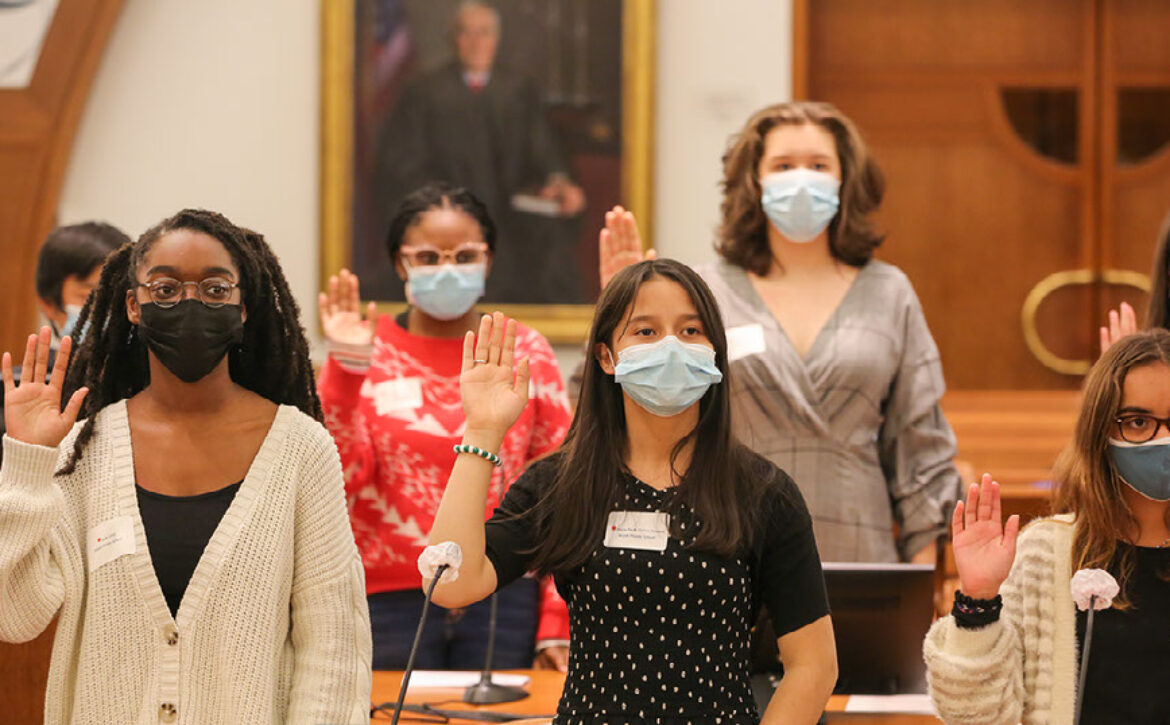
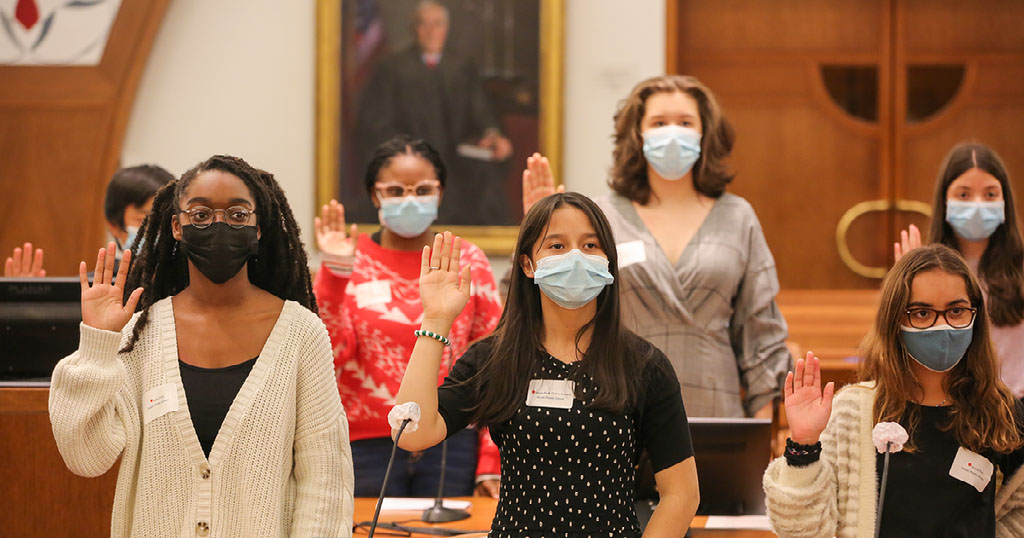
A record number 23 middle school teams presented their First Amendment cases, arguing the complicated line between hate speech and free speech before federal and state judges at Discovering Justice Mock Trial events..
In a five-day stretch, Discovering Justice hosted in-person events in seven cities across the Commonwealth with nearly 300 students.
“It was great to have students and legal mentors back in the courthouses,” said Mock Trial Program Manager Luke Matys. “We are so happy to bring everyone together to experience being in a courtroom and facing a real live judge. I know our students and volunteers missed having the mock trials in-person over the past year.”
Discovering Justice hosted in-person events at courthouses and in-partner schools in Boston, Springfield, Lowell, Worcester, New Bedford, Rehoboth, and Douglas. Discovering Justice also hosted two events virtually. Read more about the four schools from Springfield which participated in the U.S. Courthouse there.
Over the fall semester, middle school students wrestled with the case of Taylor Young. Taylor is a junior at the fictional Westbury (MA) High School. Taylor is the President of the school’s Planet Club, which provides an open space for students to learn and have discussions on environmental issues. They invited Blake del Valle to speak — a provocative journalist and author, who argues that it is morally wrong to eat meat and often publicly shames people who do
After Taylor began to advertise the event, concerns arose that del Valle’s speech would be harmful to Westbury, a community with many farms, and would violate the school’s commitment to teaching students to respect others. At the PTA’s request, Principal Knight asked Taylor to cancel the event, and when Taylor refused, they were suspended from school. Taylor sued the Westbury School District, arguing that their suspension is a violation of their right to free speech.
This semester, the program served 290 middle school students from 12 cities and towns, the most in Discovering Justice history. “We are so proud of our students for their perseverance and energy throughout this challenging semester,” said Matys. Highlighting the help of legal professionals across the Commonwealth Matys added, “The program wouldn’t be possible without our 104 volunteer legal mentors. The connection and relationships they form with our students make the program special.”
If you are a lawyer, law professor, legal professional, school leader, or teacher interested in signing up your firm, law school, bar association, school district, or middle school for the Mock Appeal Program this Spring, please contact Malia Brooks (mbrooks@discoveringjustice.org).